Many organizations across industries are committed to meet ambitious ESG (“Environmental, Social, & Governance”) goals. Mostly aligned with the mantra “Record your impact. Report your progress. Reduce your footprint.”
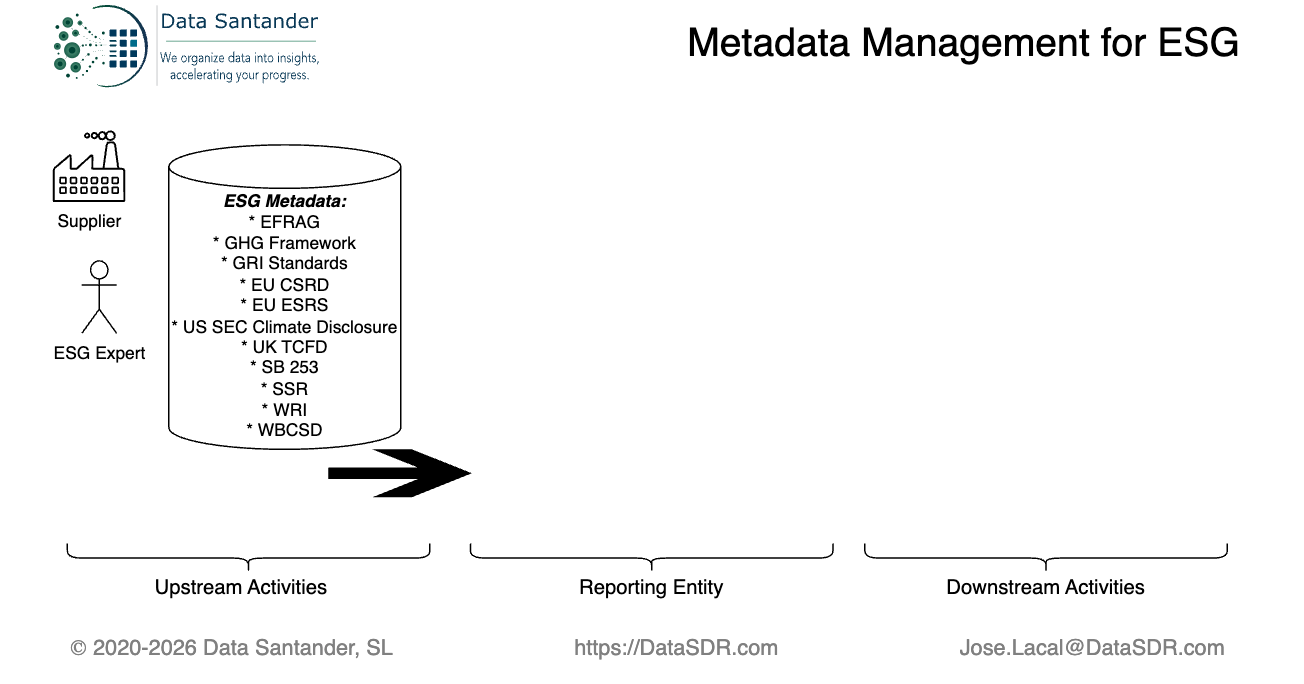
Full ESG compliance requires managing and following many standards, taxonomies, and terminologies (that we collectively label as “metadata”), including:
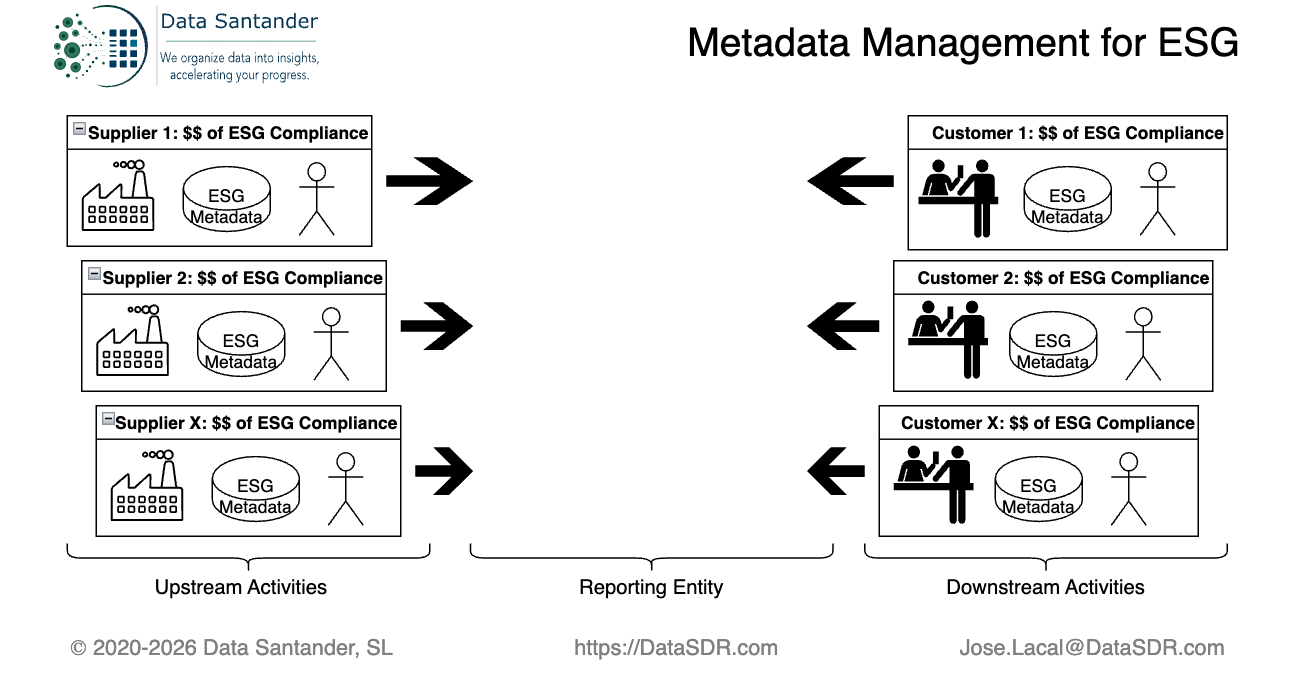
Large reporting entities have hundreds, even thousands of external stakeholders that need to manage all that metadata internally, at a significant financial and manpower cost to each individual stakeholder.
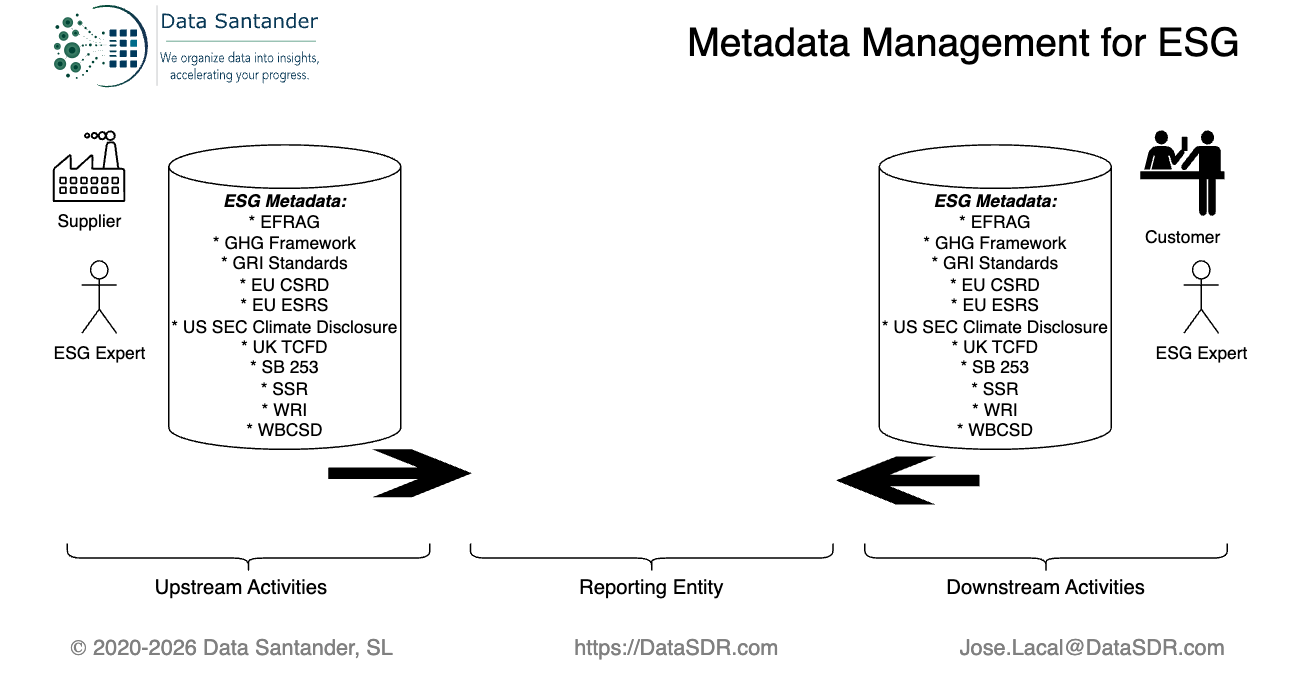
We propose a mechanism where large reporting entities provide their external stakeholders with a centralized repository of all relevant metadata. This single source of metadata truth available to external stakeholders can significantly reduce the cost of ESG harmonization and compliance across a reporting entity’s entire value chain. While directly increasing the quality and harmonization of all external data submitted to the reporting entity.
A large reporting entity faces a significant challenge managing a large and expanding ESG-driven data ecosystem across both internal and external stakeholders.
Each reporting entity has direct access to information related to Scope 1 (direct) impact data.
Reporting on upstream activities (mostly related to suppliers) has to come in from outside stakeholders.
And reporting on downstream activities (related to the impact caused by reporting entity’s products and services) comes in from both customers and those using the products and services.
Each reporting entity then has an incentive to make it easier for its external stakeholders to better manage and implement the broad set of ESG-related standards, taxonomies, and terminologies.
Upstream activities include both Scope 2 (indirect) and Scope 3 (indirect) elements.
Currently many external stakeholders incur a significant cost in maintaining their own local version of the required compliance metadata. Or accessing a third party-maintained repository.
External stakeholders are also required to have in-house experts able to manage and interpret all relevant metadata sources.
Downstream activities generate Scope 3 (indirect) impacts.
A large reporting entity needs to collect data from its customers, and eventually the end users of its products and services.
This data collection requirement forces the reporting entity’s customers to both manage ESG-related metadata internally and to hire compliance experts.
The next challenge then becomes data ingestion, where the reporting entity has to ingest data from many external stakeholders. And each data feed may come in using a variety of (non-harmonized, non standard-compliant) formats and terminologies.
The costs and complexity imposed on each stakeholder managing their own metadata grows exponentially with the number of stakeholders a reporting entity has.
Those additional compliance costs are then passed on to the reporting entity.
We want to propose a better way to handle this metadata, while significantly reducing costs for all external stakeholders.
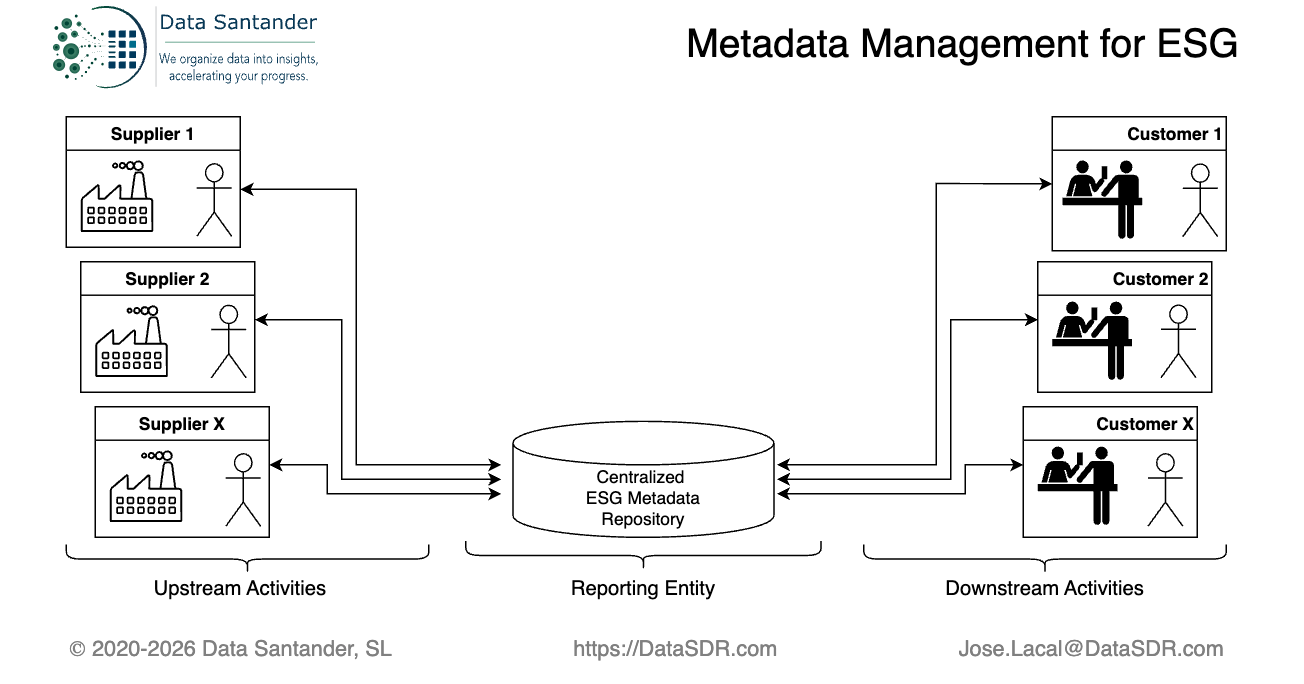
We propose a model where a large reporting entity hosts and manages a centralized repository of all relevant ESG-related metadata, including standards, taxonomies, and terminologies.
The reporting entity can then provide access to this repository to its stakeholders, both internal as well as external.
The repository will provide both web access (through a web browser for human-driven searches), as well as API-based access (for automated access). (API – “Application Programming Interface”).
Access to the repository can be granted either through username / password credentials. Or leveraging the reporting entity’s SSO (“Single Sign-On”) infrastructure.
This single source of metadata truth available to external stakeholders can significantly reduce the cost of ESG harmonization and compliance across a reporting entity’s entire value chain.
While directly increasing the quality and harmonization of all external data submitted to the reporting entity.
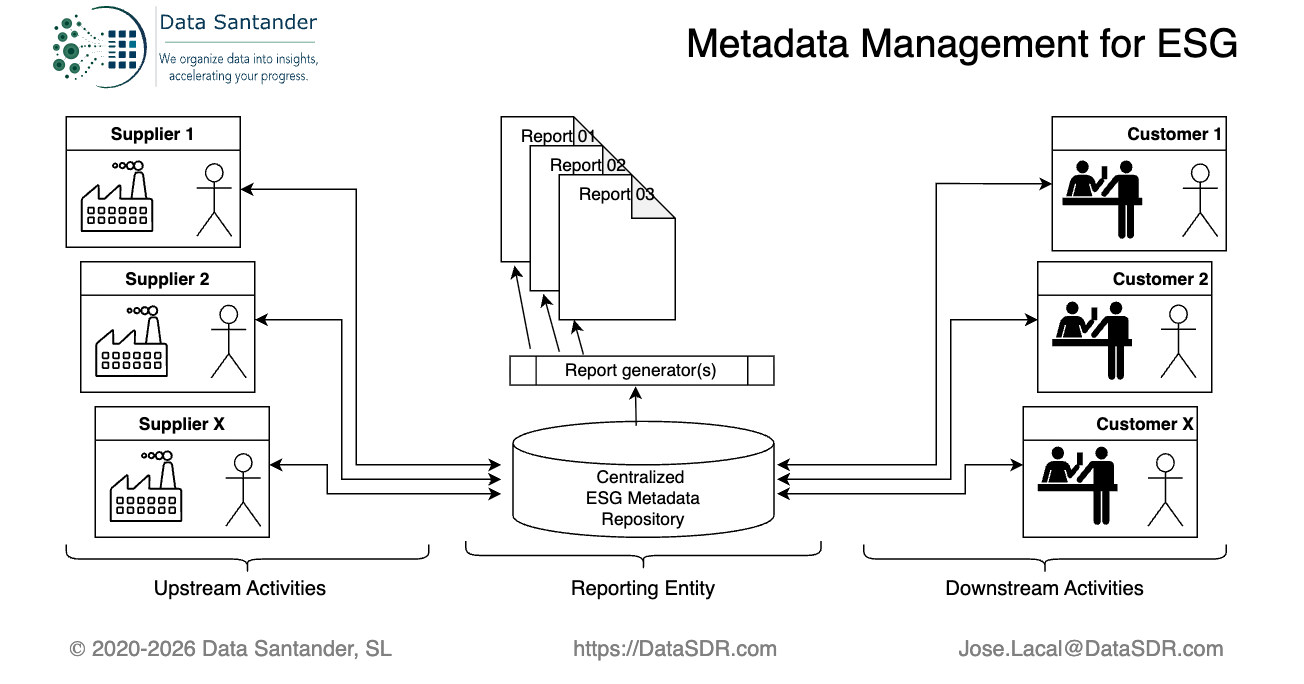
A second phase of the metadata repository is when external stakeholders can submit their data through the repository, thus enforcing the reporting entity’s metadata.
This harmonized data can then be easily re-purposed for creating reports.
The repository then becomes not only the single source of truth but also a traffic cop that controls, and shapes, all data flowing into the reporting entity.
Please contact us if your organization has a data management challenge you need assistance with.