
Biobanks store and manage each specimen and its metadata using classifications, code systems and terminologies available at the time the specimen is registered in the system.
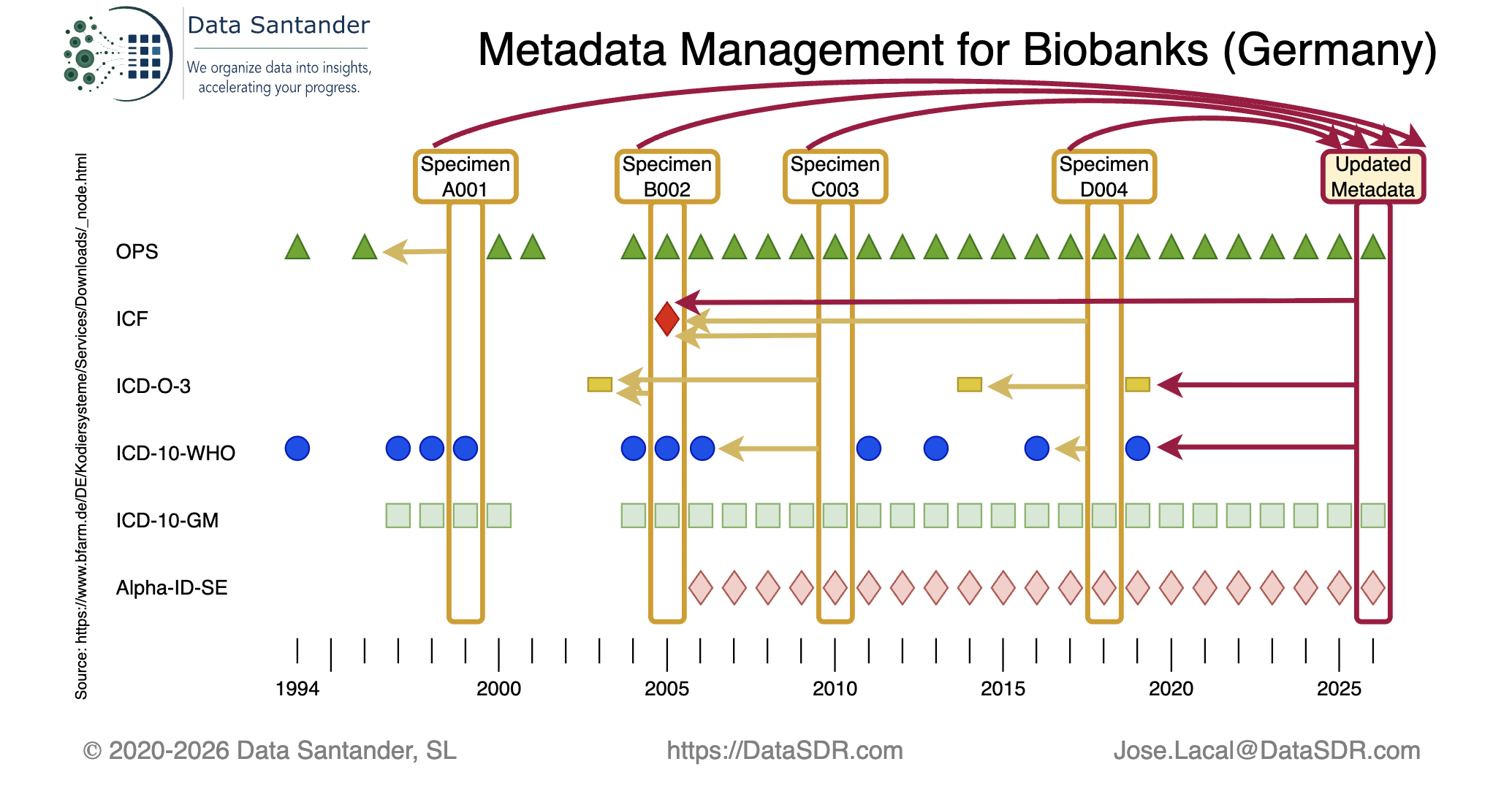
We propose that updating the specimens' metadata to the latest code systems can improve the user’s ability to search for specimens of interest.
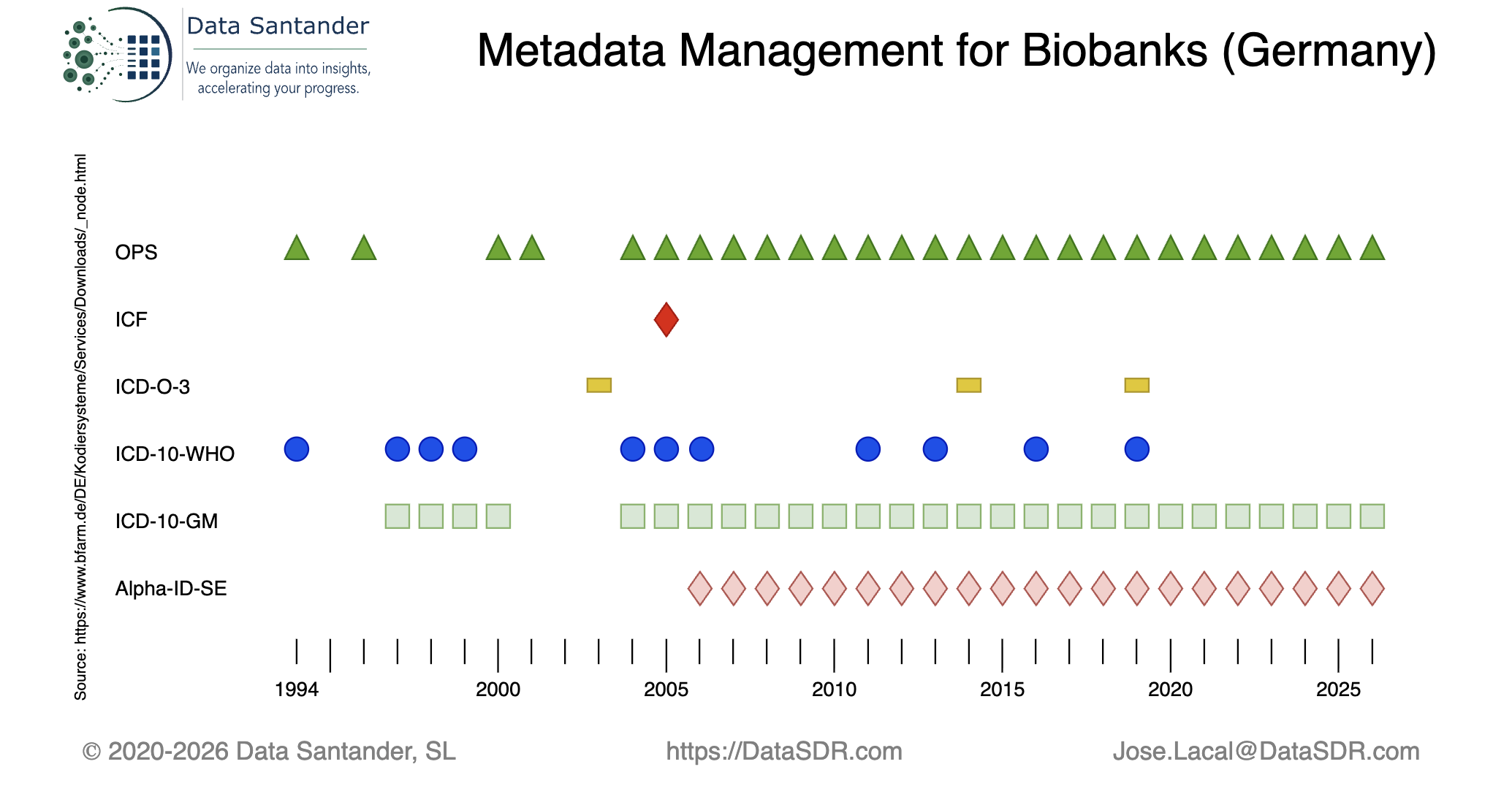
The diagrams below describe the coding systems listed by Germany’s Bundesinstitut für Arzneimittel und Medizinprodukte (“BfArM”).
Some coding systems have versions as far back as 1994, and several code systems provide yearly releases.
Source of data: https://www.bfarm.de/DE/Kodiersysteme/Services/Downloads/_node.html
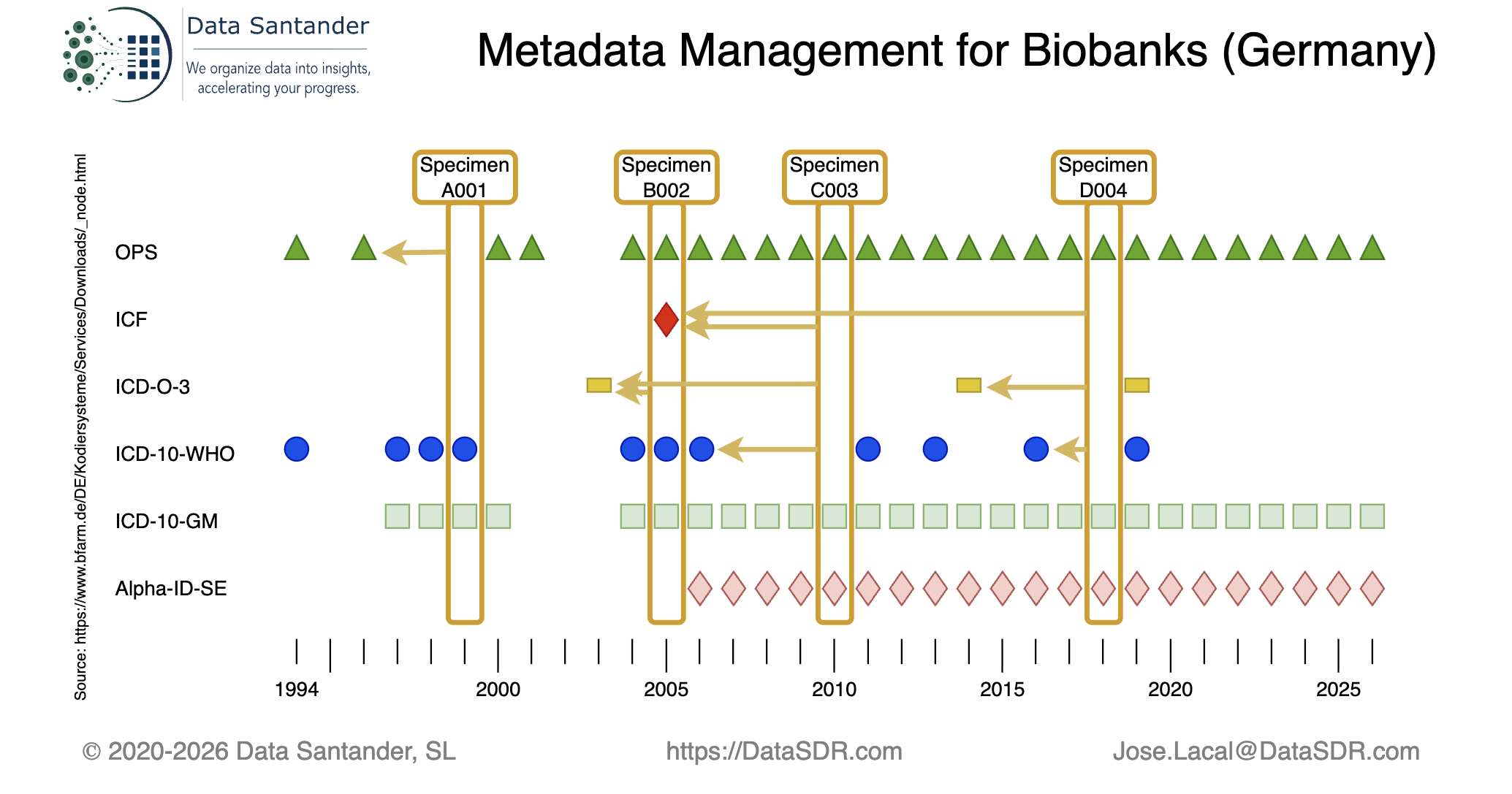
In the diagram below we show 04 specimens, collected and stored on different dates.
Each specimen’s metadata is likely to include values from the coding systems that were valid at the time of specimen storage.
For example, a specimen stored using the 2017 version of ICD10-GM may look like this:
Updating the specimen’s metadata to the 2026 version may require updating the values to these:
Our thesis is that a biobank can benefit from updating the metadata of each specimen to the latest versions of the coding standards.
This automated updating / upcoding is possible when the biobank’s code systems and terminologies are managed centrally.
Please contact us if your organization has a data management challenge you need assistance with.